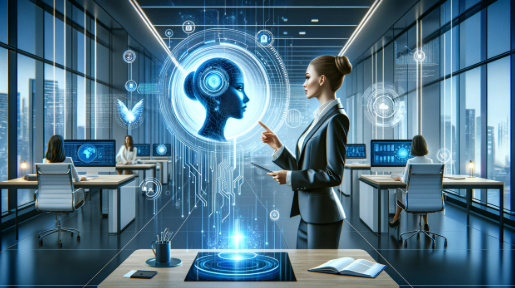
AI Assistants in the Workplace

AI assistants are increasingly becoming integral to workplace dynamics, reshaping productivity and employee engagement. By automating routine tasks, these tools allow employees to focus on more complex challenges, fostering creativity and innovation. However, the integration of AI also introduces ethical dilemmas and concerns regarding workforce displacement. As businesses navigate this evolving landscape, the implications of AI adoption warrant careful examination, particularly in balancing human input with technological progression. What lies ahead for this collaboration?
Benefits of AI Assistants in the Workplace
As organizations increasingly adopt technology to enhance productivity, AI assistants emerge as pivotal tools in the modern workplace.
These intelligent systems facilitate productivity enhancement through efficient task automation, allowing employees to focus on higher-order responsibilities.
Challenges and Considerations
While the integration of AI assistants offers numerous advantages, organizations must also navigate several challenges and considerations to maximize their effectiveness.
Key among these are the ethical implications of decision-making algorithms and the potential for workforce displacement, which can lead to employee dissatisfaction and unrest.
Addressing these concerns is vital for fostering a collaborative environment where both human and AI contributions are valued.
Real-World Applications
Although the integration of AI assistants in the workplace has generated significant discourse, their real-world applications reveal a transformative potential across various sectors.
By facilitating task automation, organizations can streamline operations, leading to increased efficiency.
Moreover, AI assistants enhance employee engagement by providing personalized support and freeing up time for more creative and strategic endeavors, ultimately fostering a more dynamic work environment.
See also: 3D Printing in Medicine
The Future of AI Assistants in Business
What innovations lie ahead for AI assistants in business as they continue to evolve?
Their personalization potential may revolutionize customer engagement, tailoring interactions to individual preferences.
Furthermore, enhanced workforce integration will enable seamless collaboration between humans and AI, fostering creativity and productivity.
As these technologies advance, businesses could unlock new efficiencies, driving growth while ensuring employees maintain autonomy and fulfillment in their roles.
Conclusion
In conclusion, the integration of AI assistants in the workplace is akin to a skilled conductor leading an orchestra, where technology harmonizes with human talent to create a symphony of productivity. While these intelligent tools enhance efficiency and creativity, businesses must navigate the complexities of ethical considerations and workforce dynamics. As companies embrace this technological evolution, the balance between human ingenuity and AI capabilities will be crucial in shaping a collaborative future, where both can thrive.