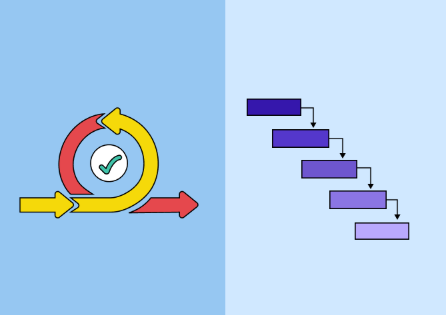
Agile Vs Waterfall Methodology

The debate between Agile and Waterfall methodologies remains a significant topic in project management. Each approach has distinct characteristics that cater to different project needs. Agile promotes flexibility and collaboration, while Waterfall emphasizes structure and documentation. Understanding the nuances of these methodologies can greatly influence project outcomes. As organizations face diverse challenges, the decision on which methodology to adopt becomes critical. What factors should be considered when making this choice?
Overview of Agile Methodology
Agile methodology represents a dynamic approach to project management and software development, characterized by its iterative processes and adaptability to change.
This framework emphasizes continuous improvement and flexibility, enabling teams to respond effectively to evolving requirements.
Through strong team collaboration, Agile fosters an environment where feedback is integral, ensuring that each iteration aligns with user needs and enhances overall project outcomes.
Overview of Waterfall Methodology
Waterfall methodology is a linear and sequential approach to project management and software development, where each phase must be completed before moving on to the next.
This model emphasizes distinct project phases, such as requirements, design, implementation, testing, and maintenance.
Its structured documentation process ensures comprehensive records are maintained, facilitating clarity and accountability.
This framework appeals to those who prefer a defined path and organized execution.
Key Differences Between Agile and Waterfall
The contrasts between Agile and Waterfall methodologies are significant, influencing project outcomes and team dynamics.
Agile emphasizes collaboration benefits and iterative progress, allowing teams to adapt to changes quickly. In contrast, Waterfall follows a linear approach, prioritizing thorough documentation and upfront planning.
This difference impacts risk management, as Agile’s flexibility often mitigates unforeseen issues more effectively than the rigid framework of Waterfall.
See also: 3D Printing in Medicine
Choosing the Right Methodology for Your Project
Selecting the appropriate methodology for a project requires careful consideration of various factors, including project scope, team dynamics, and client requirements.
Agile methodologies may foster greater team collaboration and adaptability, ideal for evolving project requirements. In contrast, Waterfall suits well-defined projects with stable needs.
Ultimately, understanding the specific context and goals will guide teams in choosing the most effective approach for successful outcomes.
Conclusion
In the realm of project management, Agile and Waterfall stand as two distinct paths through a dense forest. Agile embodies the nimble deer, swiftly adapting to the shifting terrain, while Waterfall resembles the steadfast oak, firmly rooted in structure and tradition. Each approach offers unique strengths suited to different landscapes of project requirements. Ultimately, the choice between them hinges on the specific journey at hand, guiding teams toward their destination with the appropriate blend of flexibility and order.