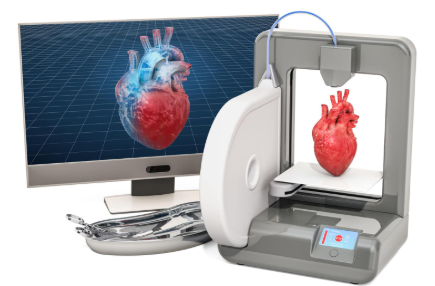
3D Printing in Medicine

3D printing is transforming the landscape of medicine through its ability to create customized healthcare solutions. This technology facilitates the production of tailored prosthetics, detailed surgical models, and innovative living tissues. While it offers significant advancements in patient-specific applications, challenges remain in material selection and regulatory approval. The implications of these developments raise critical questions about accessibility and ethical considerations that warrant further exploration.
The Role of 3D Printing in Prosthetics
As advancements in technology continue to reshape various fields, 3D printing has emerged as a transformative force in prosthetics.
This innovative method enables the creation of personalized prosthetics that cater to individual anatomical needs. Additionally, it offers cost-effective solutions, reducing material waste and production time compared to traditional manufacturing processes.
Consequently, this technology enhances accessibility and improves the quality of life for many patients.
Surgical Planning and Training With 3D Models
Numerous studies have demonstrated that 3D models significantly enhance surgical planning and training by providing realistic anatomical representations.
These patient-specific models enable surgeons to conduct surgical simulations, allowing for improved preoperative strategies and techniques.
This tailored approach not only increases surgical accuracy but also bolsters confidence among medical professionals, ultimately leading to enhanced patient outcomes and more effective healthcare delivery.
Bio-printing: The Future of Tissue Engineering
How can bio-printing revolutionize tissue engineering? This innovative technology enables the layer-by-layer construction of living tissues, offering unprecedented possibilities in regenerative medicine.
By utilizing bio-inks composed of cells and biomaterials, bio-printing can facilitate organ transplantation, reducing dependency on donor organs.
As this field advances, it holds the potential to address critical shortages in transplantable tissues, enhancing patient outcomes significantly.
See also: chevalverite
Ethical Considerations and Challenges in 3D Printing for Medicine
While the advancements in 3D printing technology offer transformative potential for the field of medicine, they also raise significant ethical considerations and challenges that must be addressed.
Key issues include obtaining patient consent for printed materials and navigating the complexities of regulatory frameworks that govern safety and efficacy.
Ensuring ethical practices will be crucial for the responsible integration of 3D printing into medical applications.
Conclusion
In conclusion, 3D printing in medicine is akin to a master sculptor shaping clay, allowing for the precise customization of healthcare solutions that cater to individual patient needs. As this technology continues to evolve, it promises to enhance the quality of care through personalized prosthetics, advanced surgical planning, and innovative tissue engineering. While challenges remain, the potential benefits of 3D printing in improving patient outcomes and accessibility mark a significant advancement in the medical field.